
The Global Page in Advanced Link Manager provides a powerful, centralized view to explore, filter, and manage issue link structures across your Jira instance.
In addition to visualizing complex relationships, applying advanced filters, highlighting key issues, and performing bulk actions, the Global Page now includes Compose Tree a flexible feature that allows you to define, customize, and reuse hierarchical structures.
Add a Link
You can add a link directly from the Global Page:
-
Click the Link icon on the right side of the work item.

-
Select the Link Type.
-
Choose the work item you want to link.
-
Click Link to create the relationship.

You can enable the option to display only work items with the same parent work item.
This allows you to select a work item directly from the filtered list.
Filters
The Global Page provides powerful filtering options to help you quickly focus on the most relevant issues.
Available Filters
-
Space: Filter issues by space or space category, such as:
All, Work, Software, Product, Service -
Status: Select one or multiple statuses (To Do, In Progress, Done) or filter by status category.
-
Link Type : Filter issues based on their relationship type, including: blocks, causes, clones and more.
-
Work Item Type : Narrow results by issue type such as Epic, Story, Bug, etc.
-
Priority : Filter issues by priority level (High, Medium, Low).
-
Clear Filters: Instantly remove all applied filters and reset the view.
Important Note
-
Filters are applied only to root issues (main issues) by default.
-
Linked issues and child issues are not affected
Filter by JQL in the Gadget
-
You can now search and filter issues using JQL (Jira Query Language).
What You Can Do
-
Enter any valid JQL query
-
Combine multiple conditions for advanced filtering
Example Queries
-
project = "Cloud Platform" AND status != Done -
assignee = currentUser() AND priority = High -
created >= -7d
Select Saved Filter
-
Use the Saved Filter option to quickly apply an existing Jira filter
-
Simply choose one of your saved filters from the dropdown list, and the results will automatically display in the table
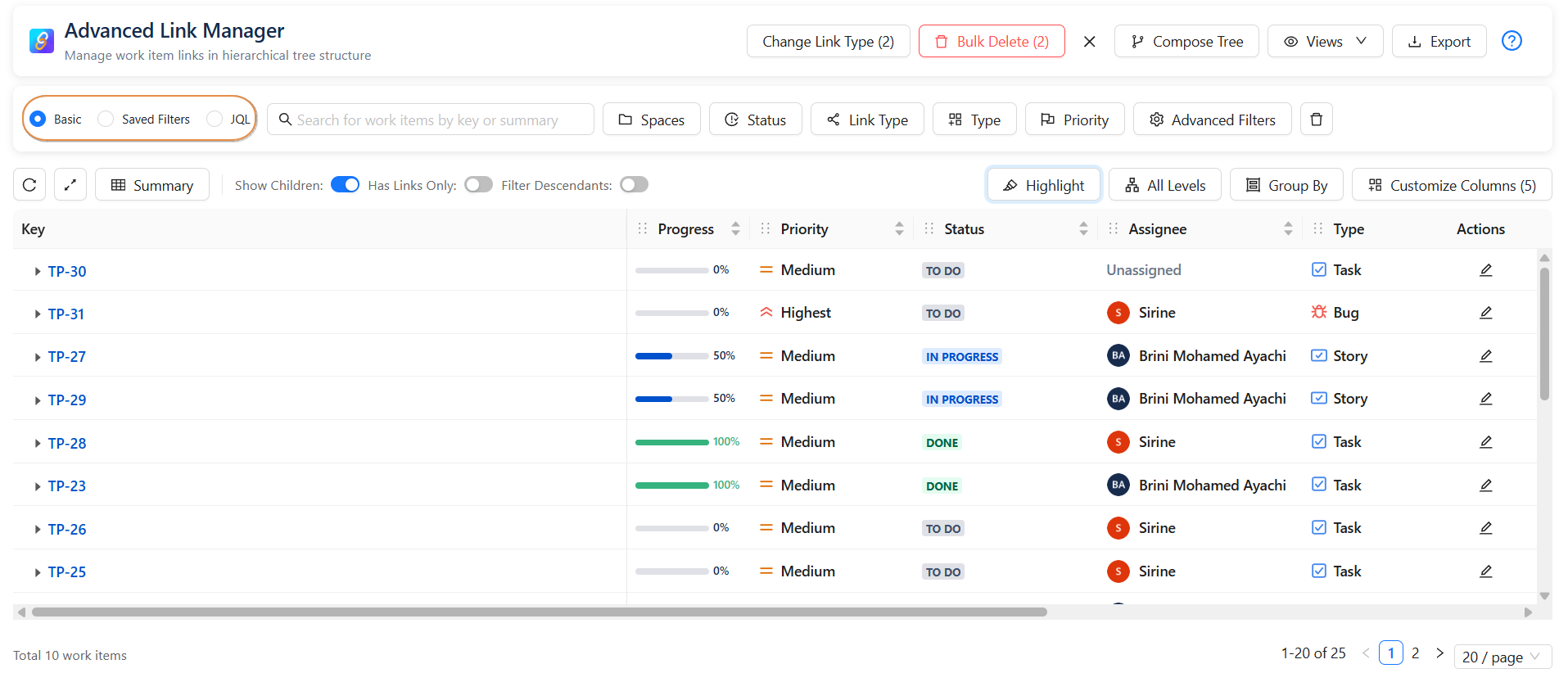
2. Levels Display (Hierarchy Depth)
-
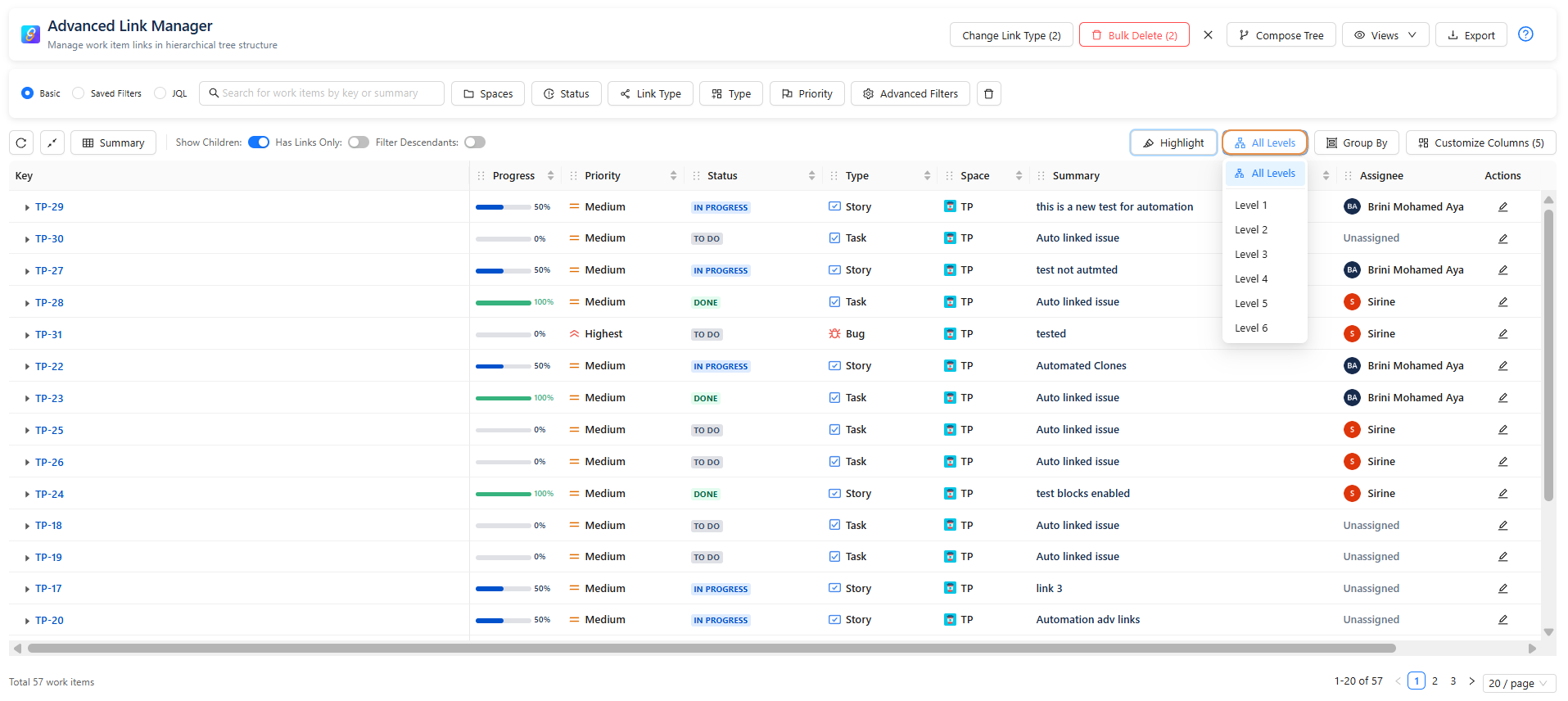
You can display up to 6 levels of linked issues.
-
Choose the exact level depth you want to show in the table.
-
This helps control how deep the issue hierarchy is displayed.
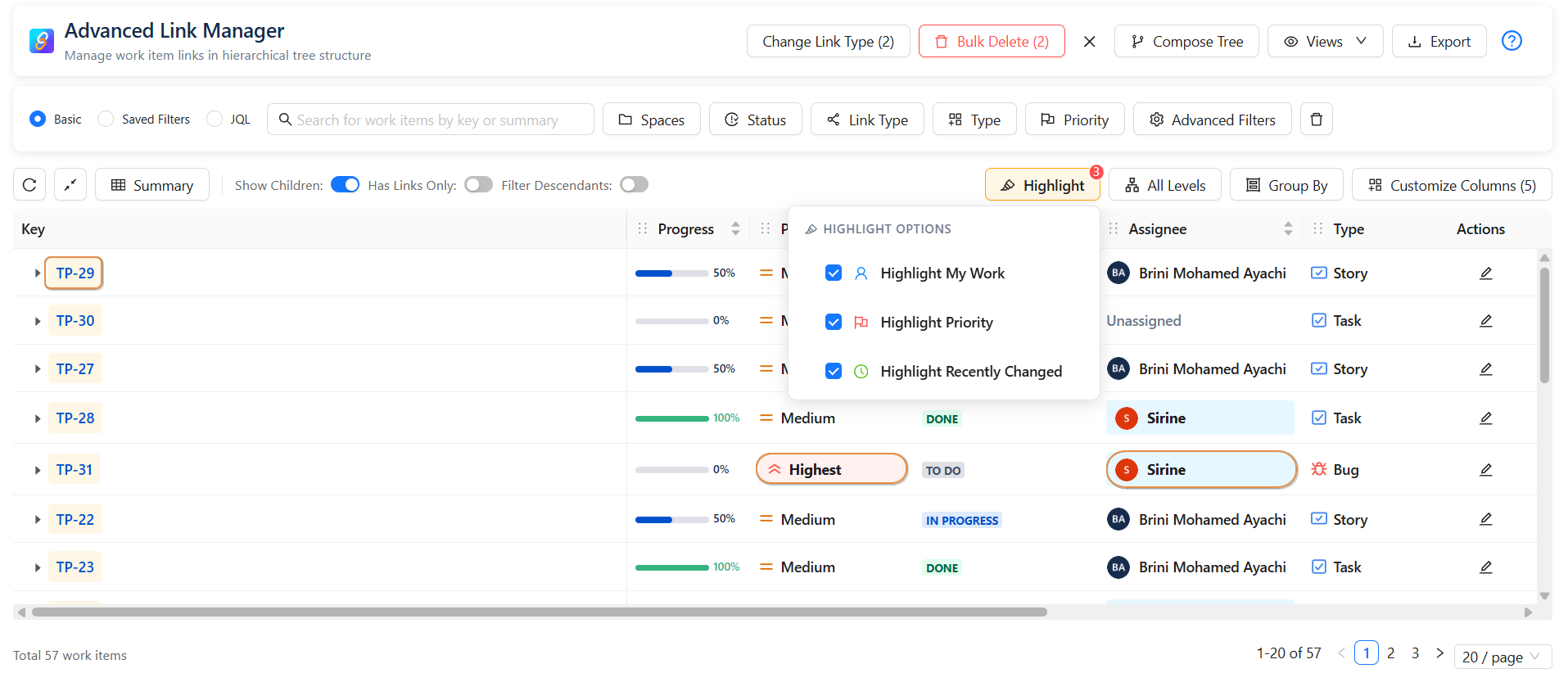
3. Highlight Options
Highlighting helps you quickly identify important issues in the table.
Available Highlight Modes
-
Highlight My Work: Highlights issues assigned to the current user.
-
Highlight Priority: Highlights the highest-priority issues.
-
Highlight Recently Changed: Highlights issues that were recently updated.
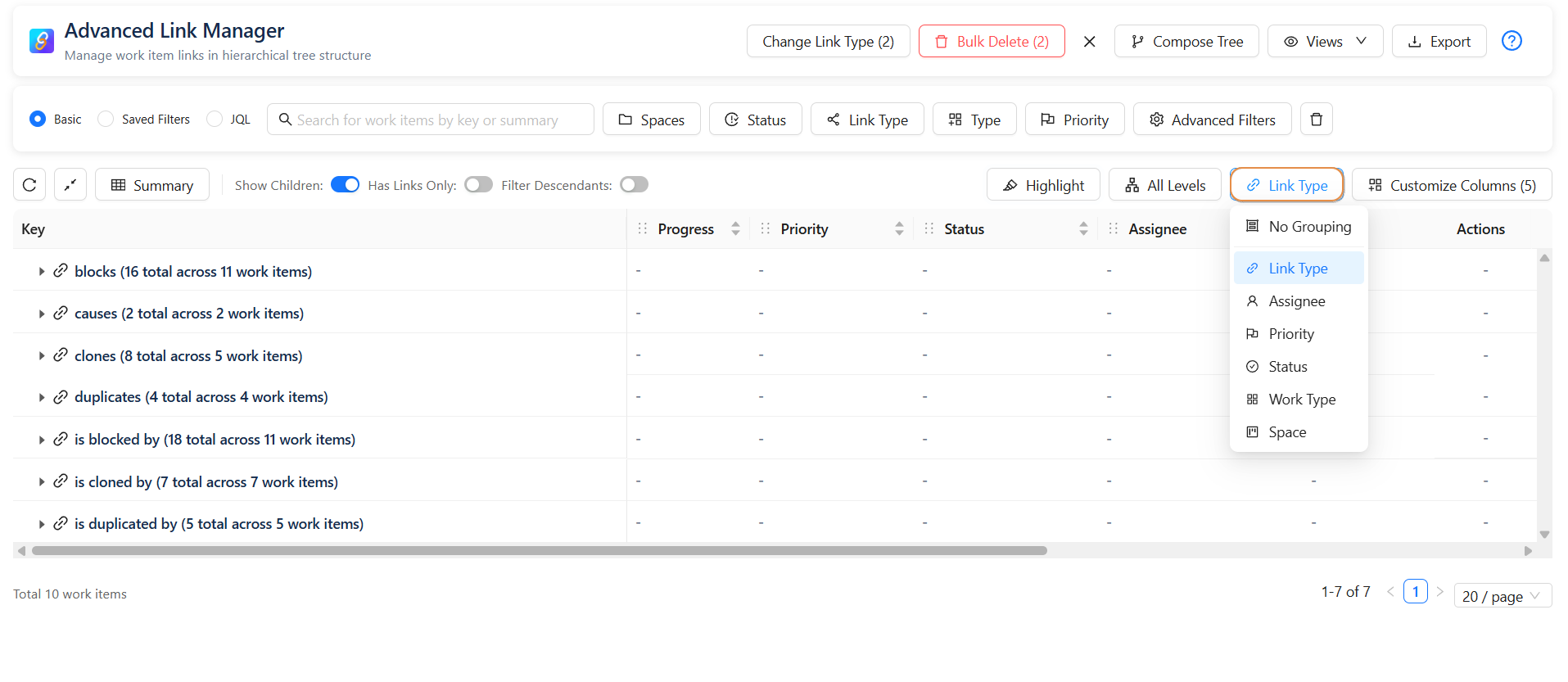
4. Group By
You can organize issues using different grouping options:
-
No Grouping
-
Link Type
-
Assignee
-
Priority
-
Status
-
Issue Type
Grouping helps structure the table and improve readability.
5. Expand and Collapse Levels
-
Expand issues level by level (from level 1 up to level 6).
-
Collapse expanded levels at any time.
-
This allows you to navigate large structures easily.
6. Refresh Data
-
The Refresh button reloads the table.
-
Use it to display the most recent changes applied to issues or links.
7.Share a Link
To share a work item link:
-
Click the Share Link icon.
-
The link is automatically copied to your clipboard.
-
A confirmation message appears indicating that the link has been copied to the clipboard.
-
Paste the link wherever you want to share it.

8. Bulk Actions
The Global Page supports bulk operations on selected issues:
-
Bulk Change Link Type
-
Select the links you want to update.
-
Click Bulk Change.
-
Choose Change Link Type.
-
Select the new link type you want to apply.
-
Click Check.
✅ The selected links will be updated to the new link type.
-
-
Bulk Delete Links
-
Select the links you want to delete.
-
Click Bulk delete.
-
A confirmation pop-up appears.
-
Click Yes to confirm.
✅ The selected links will be deleted.
-
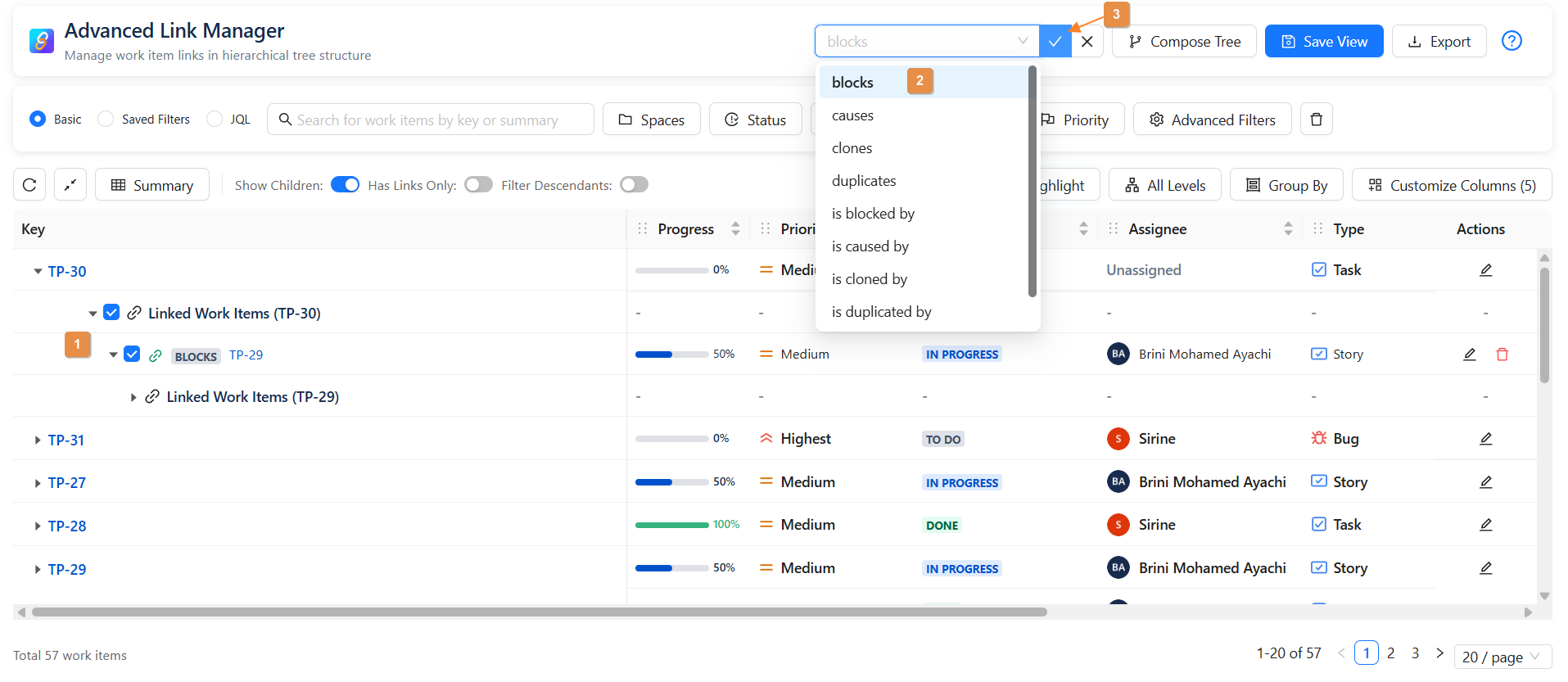
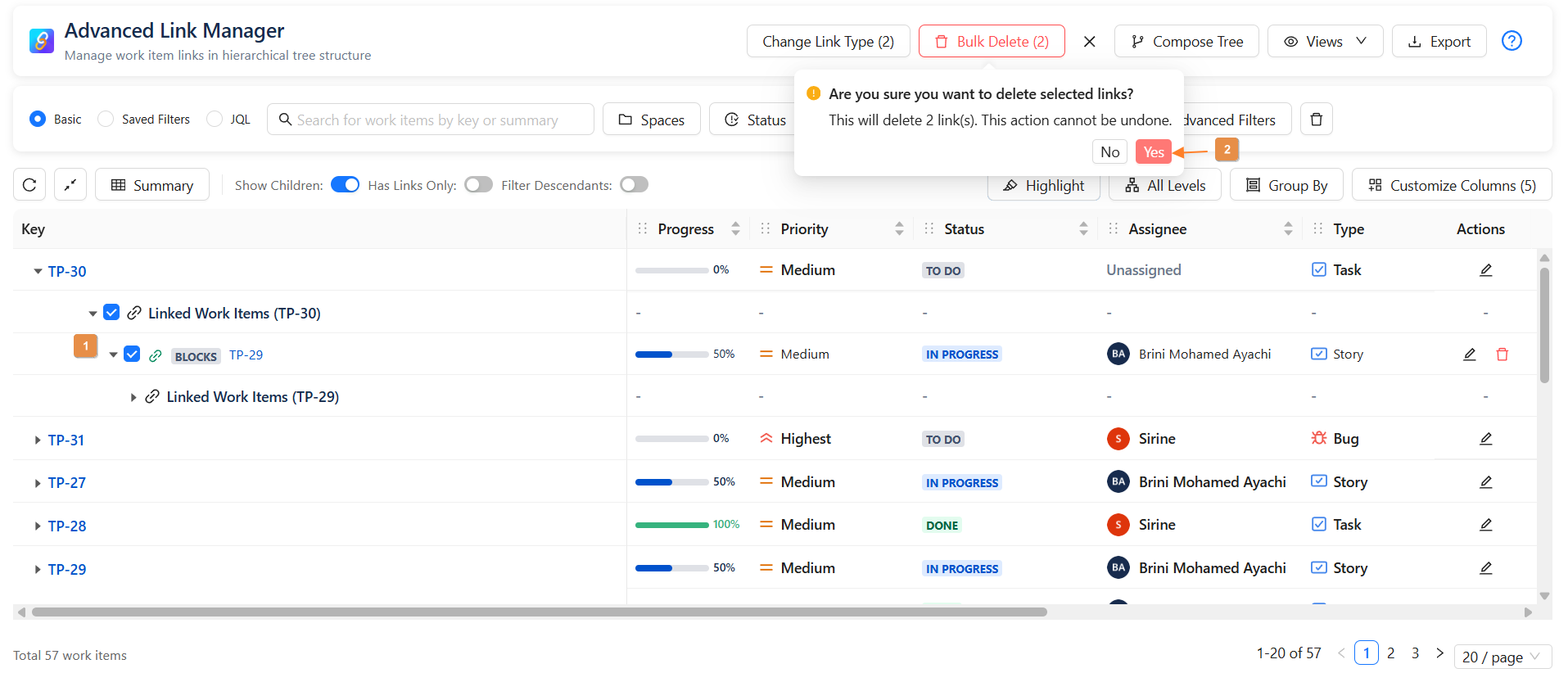
This helps save time when managing multiple links at once.
9. Toggle Options
Several toggle switches allow you to control what is displayed:
-
Show Children : Show or hide child issues.
-
Show Issues Without Links
Display or hide issues that have no links. -
Filter Descendants
When enabled, filters are applied not only to root issues but also to children and linked issues.
Once the toggle of filter descendants is enabled , the filters are applied only to children and linked issues
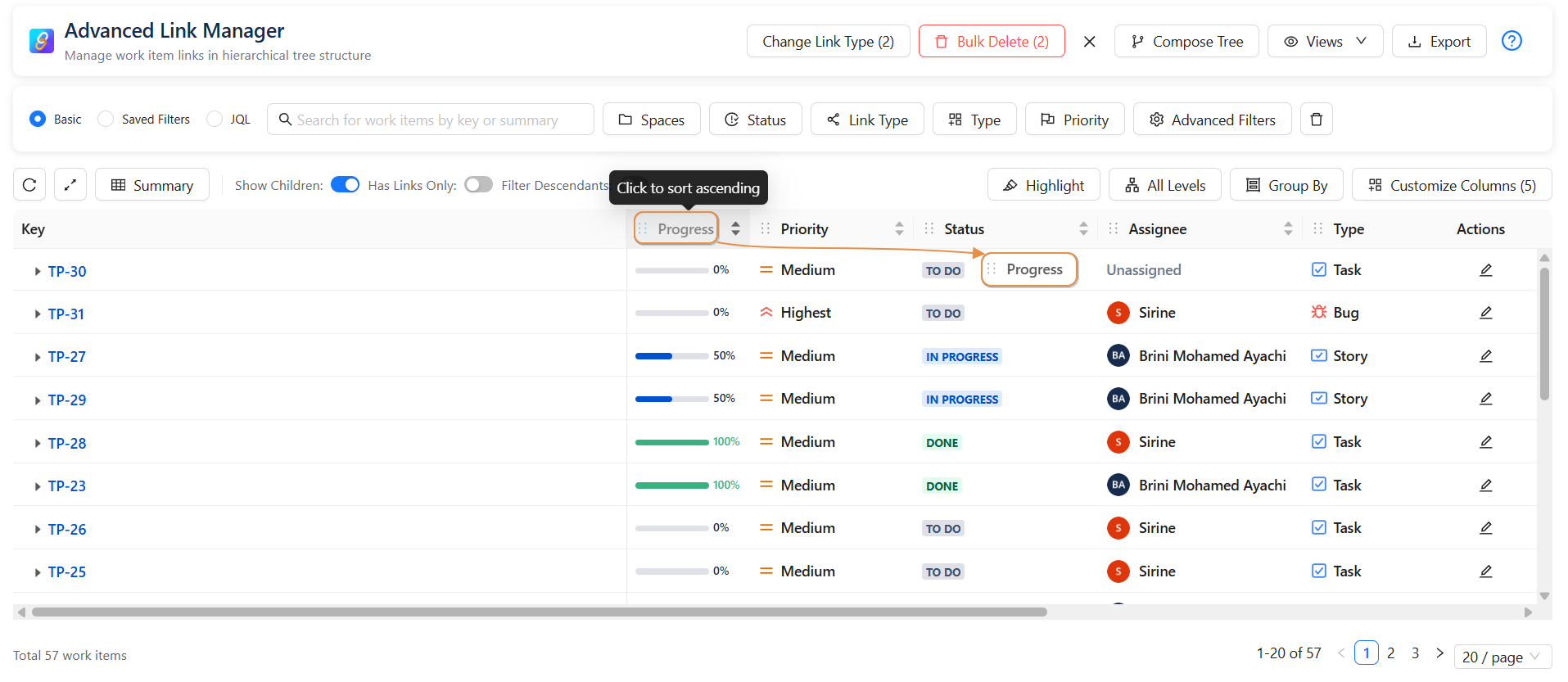
10. Customize Columns
You can fully customize the table columns:
-
Add or remove fields based on your needs.
-
Reorder columns as needed by drag and drop .
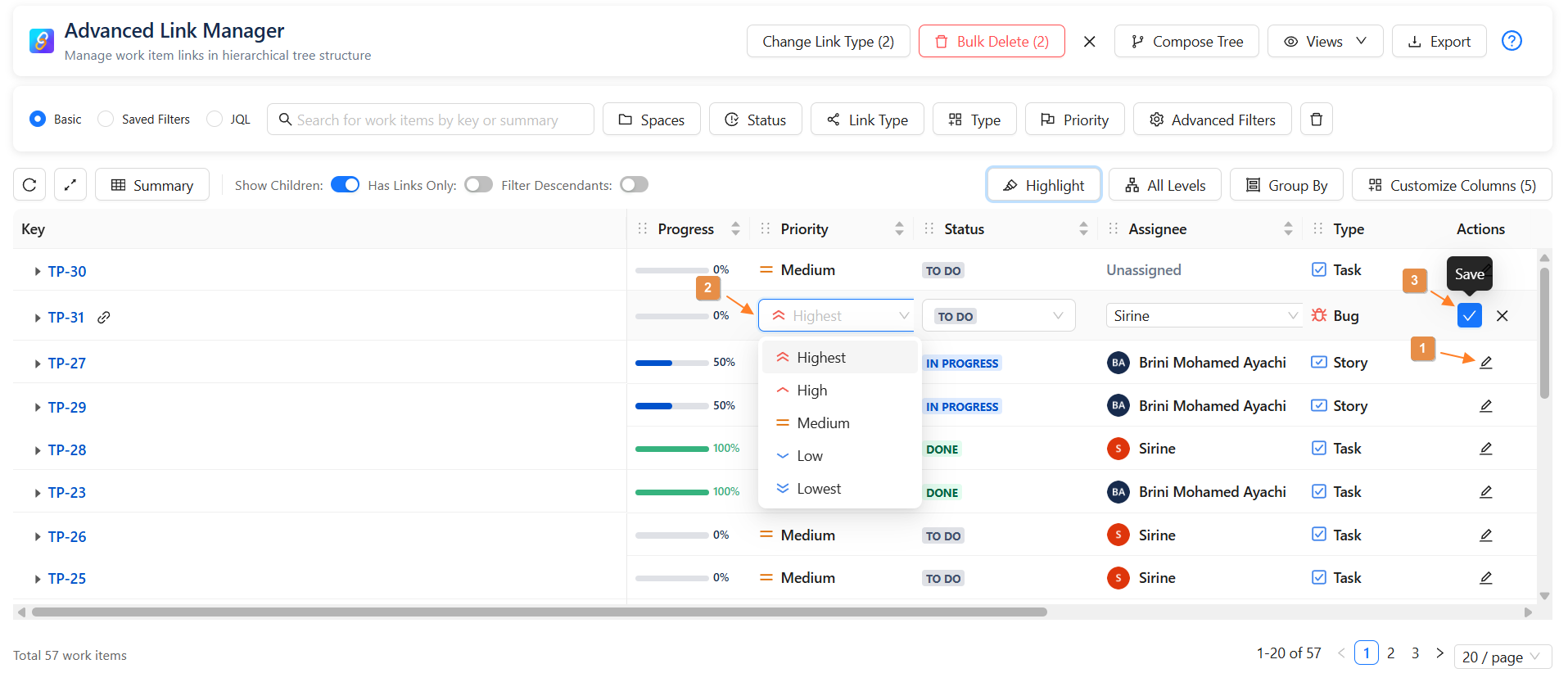
🔹 Inline Editing:
You can edit issue fields directly from the table without opening the issue view.
Compose Tree (The Powerful Feature)
-
The Compose Tree is a powerful feature available on the Global Page that allows you to define, customize, and reuse structures for displaying linked issues in the table.
-
It gives you full control over how issue relationships are organized and visualized.
Default Tree Structure
-
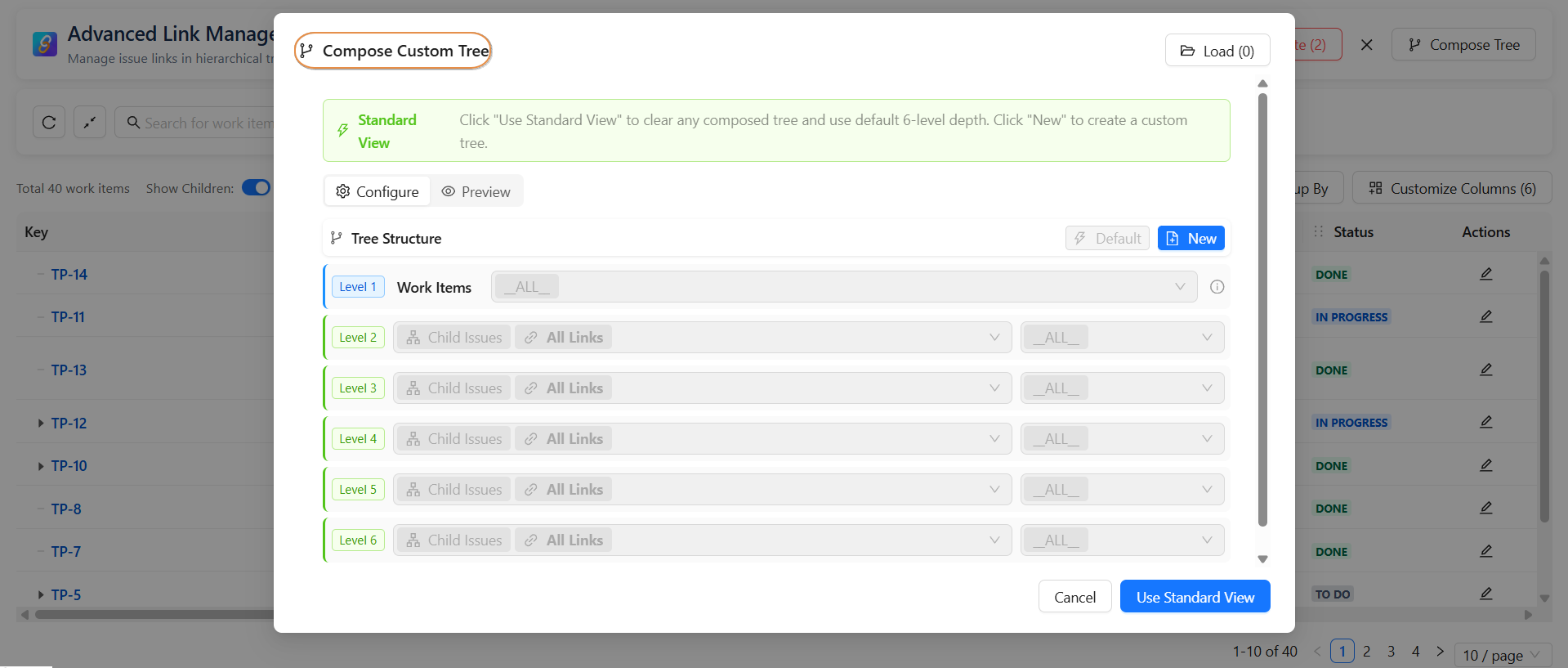
When you open the Global Page, the table automatically displays a default hierarchy, which is also shown in the Compose Tree panel.
Default Structure
-
Level 1: Work Items=ALL
-
Level 2: Child issues + All Links
-
Level 3: Child issues + All Links
-
Level 4: Child issues + All Links
-
Level 5: Child issues + All Links
-
Level 6: Child issues + All Links
This default tree provides a standard, ready-to-use view for visualizing issue relationships without any configuration.
Create a New Tree Structure
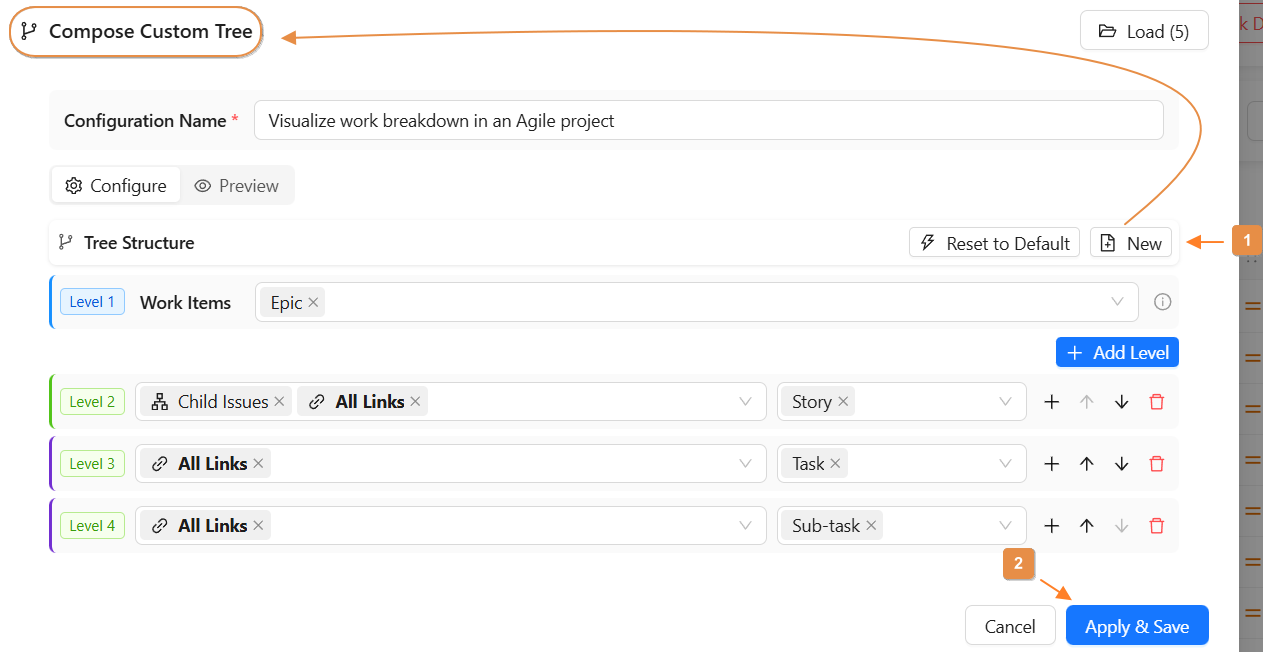
To create a custom hierarchy:
-
Click New Structure
-
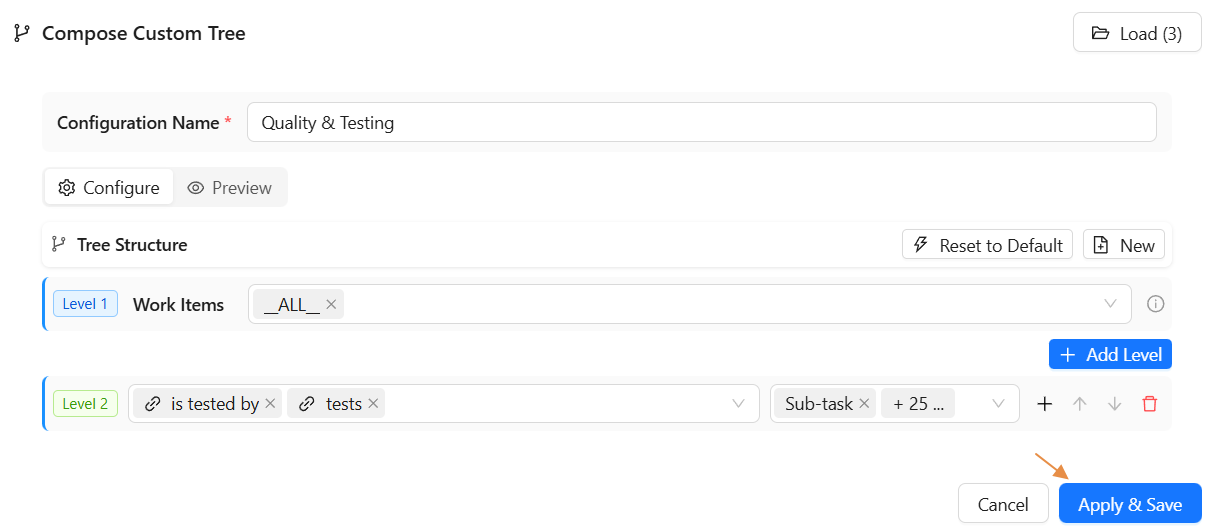
Enter a Configuration Name (required)
-
Configure the tree by defining the structure for each level added
-
Click Apply and save
Once saved, the new structure is immediately applied to the table.
Reset to Default Structure
-
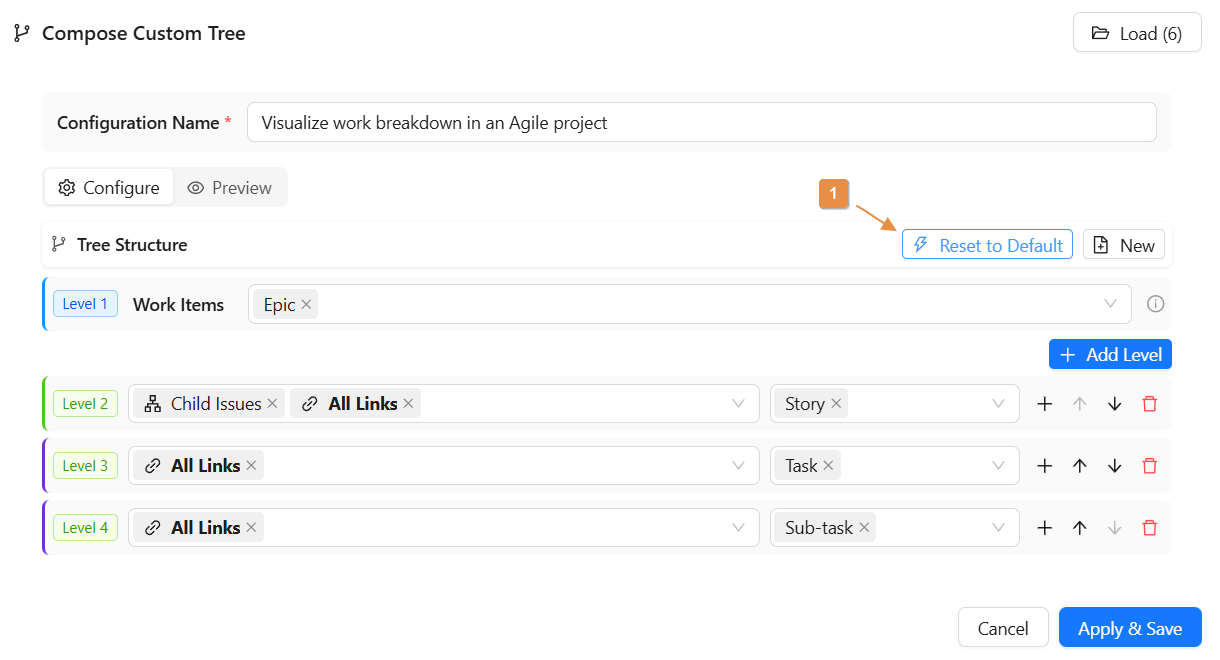
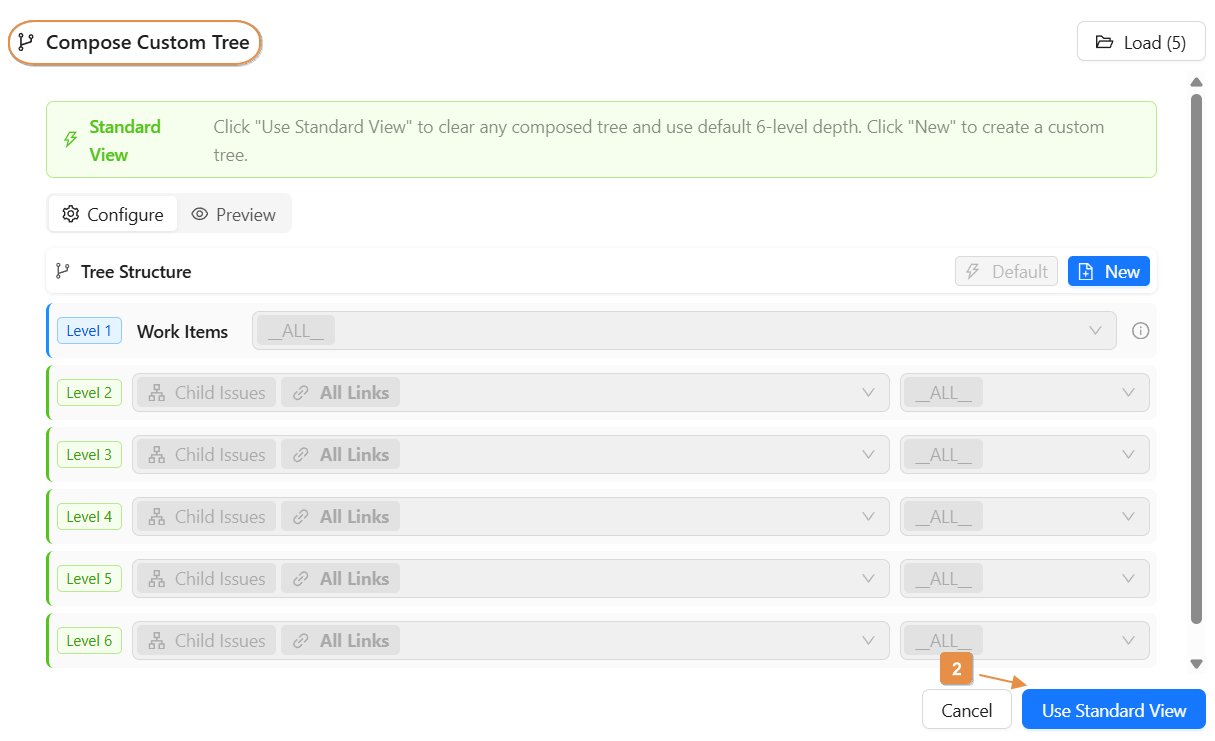
At any time, you can return to the default hierarchy:
-
Click Reset to Default
-
Click Use Standard View
This action reapplies the default tree structure to the table instantly.
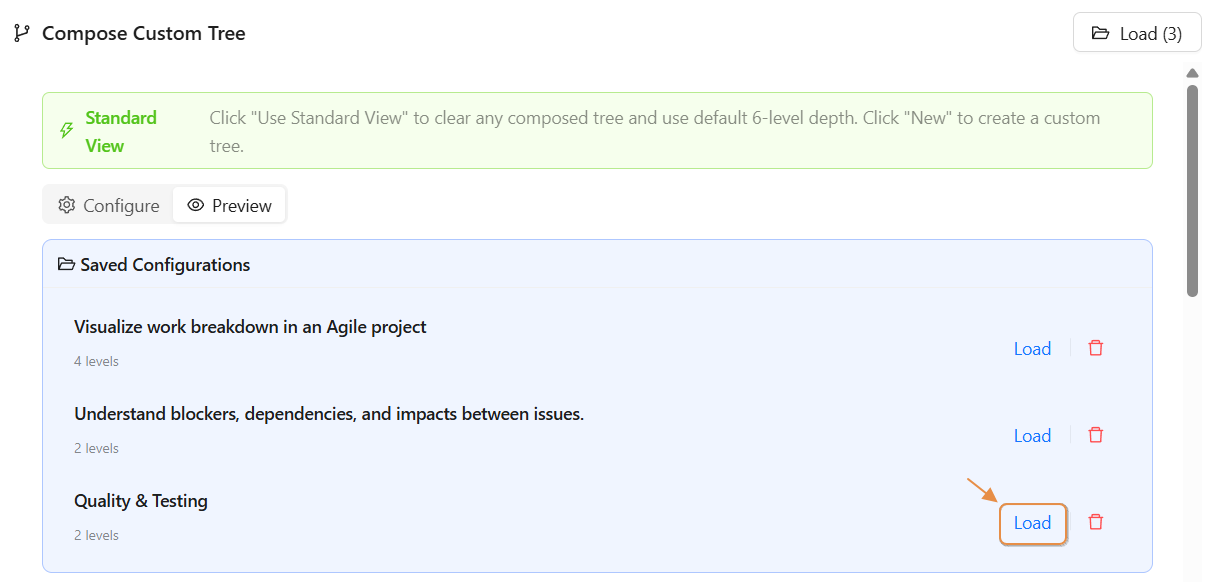
Edit an Existing Structure
You can modify a saved tree structure at any time:
-
Click Load
-
Select the structure you want to edit
-
Update:
-
The configuration name
-
The hierarchy levels
-
-
Click Apply and Save to update the structure
Clear Custom Structure
If you want to discard the current custom structure:
-
Click Clear
This action resets the table view back to the default tree structure.
Load Saved Structures (Key Benefit)
-
One of the most powerful aspects of Compose Tree is that all applied structures are automatically saved.
-
Whenever you want to reuse a structure, simply click Load, select the Structure you want to display, optionally edit it if needed, then click Save and Apply.
-
The selected structure will be instantly loaded and applied to the table.
Why Compose Tree Is Powerful
-
Create custom hierarchical views tailored to your use case
-
Easily switch between multiple saved structures
-
Quickly revert to the default structure
-
Ideal for complex issue relationships and large Jira instances
Conclusion
-
The Global Page is a comprehensive and highly flexible tool for managing linked issues at scale.
-
With the addition of Compose Tree, users gain full control over how issue hierarchies are structured, saved, and reused.
-
By combining those features the Global Page empowers teams to quickly understand complex issue relationships, adapt views to different use cases, and take action efficiently all from a single, unified interface.
-
Ready to get started? Install Advanced Link Manager for Jira and simplify work item link management across your Jira projects.
Need help?
💡 We're here for you! If you have questions or need to report a bug, visit our Help Center and raise a support ticket. Our team is ready to assist you